FAQ
Frequently Asked Questions
Quick answers to the most common questions about IBC tanks, recycling, and our services.
Request a Free Quote
What is an IBC tank?
An IBC (Intermediate Bulk Container) tank is a reusable industrial container designed for storing and transporting bulk liquids and granulated substances. The most common type consists of an HDPE (high-density polyethylene) plastic bottle enclosed in a tubular galvanized steel cage, mounted on a pallet base. Standard sizes hold 275 or 330 US gallons (1,040 or 1,249 liters). IBC tanks are also known as IBC totes, tote tanks, or simply totes.
What does IBC stand for?
IBC stands for Intermediate Bulk Container. The "intermediate" refers to the container's position between smaller packaging (drums, pails) and larger bulk transport (tanker trucks, rail cars) in the packaging hierarchy. IBCs bridge the gap for shipments that are too large for individual drums but too small for a full tanker load.
How much does a used IBC tank cost?
Used IBC tank prices vary based on condition, size, and quantity. Grade A (like-new) tanks typically cost more than Grade B or C tanks. In general, used IBC tanks cost 40-70% less than new containers. Volume discounts are available for orders of 10 or more tanks. Contact us for a specific quote based on your needs.
Are used IBC tanks safe to use?
Yes, when properly inspected and graded. Every IBC tank in our inventory is checked for cracks, leaks, valve function, and structural integrity. We disclose the known previous contents so you can make informed decisions about compatibility. For food-grade applications, we provide FDA-compliant triple-rinse cleaning and residue testing.
Can I use a used IBC tank for drinking water?
We recommend using only new or thoroughly reconditioned food-grade IBC tanks for potable water storage. If using a used tank, it must have held only food-grade products previously and must be professionally cleaned to FDA standards. The HDPE material itself is food-safe, but prior contents and cleaning history matter.
How do I clean an IBC tank?
Basic cleaning involves draining residual contents, rinsing with hot water, washing with an appropriate detergent, and rinsing again. For food-grade cleaning, a triple-rinse protocol with FDA-approved agents is required, followed by sanitization and residue testing. For stubborn stains or chemical residues, professional cleaning is recommended. We offer cleaning services for tanks in any condition.
How long does an IBC tank last?
A well-maintained IBC tank can last 10-15 years or more. The HDPE bottle has a typical useful life of 5-7 years before UV degradation becomes a concern (longer if stored indoors or with UV protection). The galvanized steel cage can last decades. Through reconditioning — which can include bottle replacement — the overall container life can be extended significantly.
Can IBC tanks be stacked?
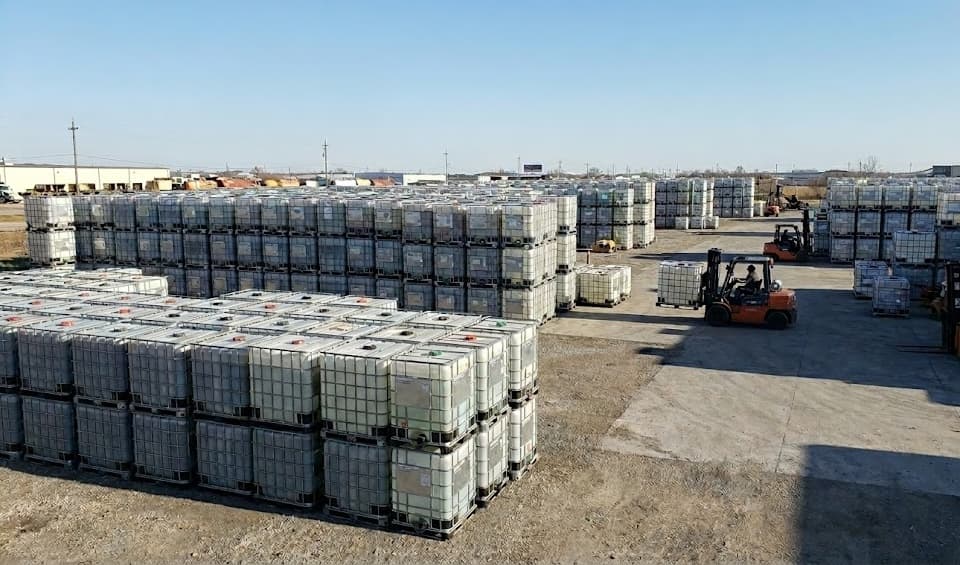
Yes. Standard IBC tanks are designed to be stacked up to 4 high when filled to capacity on a level surface. Empty tanks can typically be stacked higher. The steel cage and pallet design transfers the weight of upper tanks around the bottles below. Always follow the manufacturer's stacking guidelines and ensure the surface is level and capable of supporting the total weight.
What is the difference between a 275 and 330 gallon IBC?
Both sizes use the same 48" x 40" pallet footprint. The 330-gallon tank is approximately 7 inches taller (53" vs 46" overall height), providing 20% more capacity on the same floor space. The 275-gallon size is more common and fits standard pallet racking, while the 330 is preferred when maximum volume per pallet position is desired.
Do you deliver IBC tanks?
Yes. We deliver throughout the Bay Area (next day), California (2-5 business days), and the western United States (5-7 business days). For large orders, we optimize stackable loads to reduce per-unit shipping costs. Self-pickup is also available at our Hayward facility.
Do you buy used IBC tanks?
Absolutely. We buy used IBC tanks in any quantity and any condition. From a single tank to a full truckload, we provide fair market pricing based on condition, previous contents, and current demand. Free pickup is available for qualifying quantities in the Bay Area.
What is a reconditioned IBC tank?
A reconditioned IBC tank has been professionally disassembled, cleaned, inspected, repaired, and reassembled. The process includes deep cleaning the HDPE bottle, straightening and treating the steel cage, replacing worn valves and gaskets, and applying updated certification marks. A reconditioned tank performs like new at 40-60% of the cost.
What materials are IBC tanks made of?
The most common IBC tank consists of three main materials: an HDPE (high-density polyethylene) plastic bottle for the inner container, a tubular galvanized carbon steel cage for structural support, and either a steel or HDPE pallet base. Valves are typically polypropylene with EPDM gaskets. Some specialty IBC tanks use stainless steel instead of HDPE for the inner container.
Can I use an IBC tank outdoors?
Yes, but with some precautions. HDPE degrades under prolonged UV exposure, which can cause the bottle to become brittle over time. For outdoor use, consider UV-resistant covers, insulation jackets, or tanks with black HDPE bottles that offer better UV protection. The steel cage and pallet should be inspected periodically for rust if exposed to rain.
What UN rating do IBC tanks have?
Standard composite IBC tanks carry a UN 31HA1 rating, which certifies them for the transport of hazardous liquids by road, rail, and sea. The rating is stamped on the tank and indicates the specific performance level (packing group) the container is approved for. Reconditioned tanks can receive updated UN ratings after reconditioning.
How do I dispose of an IBC tank?
Never put IBC tanks in general waste. Contact us for recycling or disposal. We separate every component for appropriate recycling: HDPE bottle to plastic recyclers, steel cage to metal recyclers, wooden pallets to wood recyclers. For tanks that held hazardous materials, we provide certified disposal with full documentation.