IBC Tank Lifespan Guide
How long do IBC tanks really last — and what can you do to extend their useful life?
Request a Free Quote
Average IBC Tank Lifespan
An IBC tank is not a single-material product — it is a system of components, each with its own wear profile. Understanding how each part ages helps you plan maintenance, reconditioning, and replacement effectively.
HDPE Bottle
5-7 yearsUV exposure is the primary aging factor. Indoor-stored bottles last much longer. Signs of aging include yellowing, surface chalking, and brittleness. Bottles can be replaced independently of the cage.
Steel Cage
15-25 yearsGalvanized steel cages are highly durable. Surface rust from scratches is cosmetic; structural corrosion is rare. Bent bars can be straightened. The cage typically outlasts multiple bottle replacements.
Pallet Base
10-20 yearsSteel pallets last nearly as long as the cage. HDPE pallets can crack under repeated heavy loading or cold-temperature impacts. Pallets are replaceable components.
Butterfly Valve
2-5 yearsValves are consumable parts that should be inspected regularly. EPDM gaskets dry out and crack with age. Replacement valves cost under $20 and take minutes to install.
How to Maximize IBC Lifespan
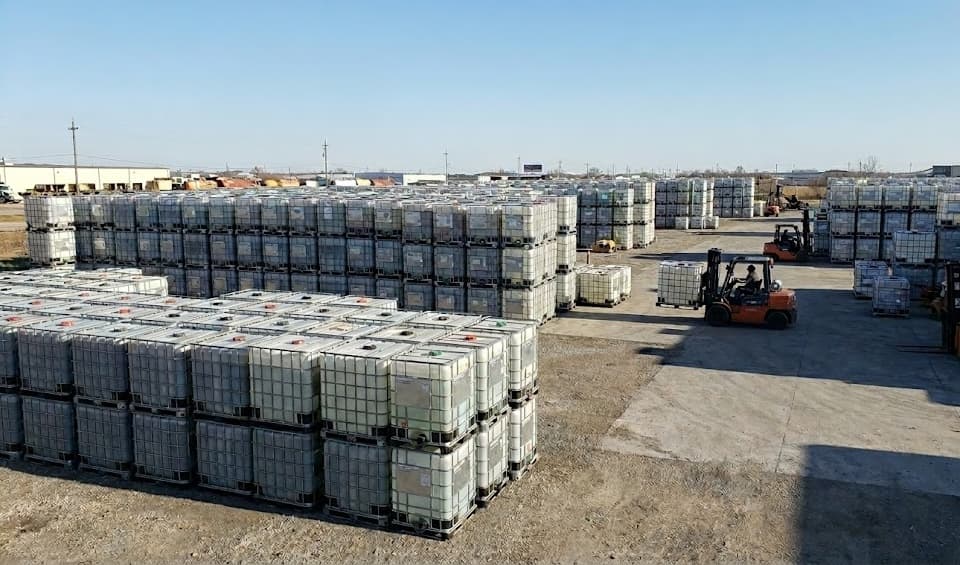
Store indoors or under cover
UV radiation is the number one killer of HDPE bottles. Even a simple tarp or shade structure dramatically extends bottle life. If outdoor storage is unavoidable, use UV-resistant tank covers or choose black HDPE bottles.
Keep tanks off bare ground
Sitting directly on soil, gravel, or wet surfaces accelerates pallet corrosion and bottom-side degradation. Store IBC tanks on concrete pads, asphalt, or elevated racks.
Rinse after each use
Residual chemicals left inside a tank between uses can attack the HDPE over time. A simple water rinse after emptying prevents long-term chemical degradation and makes future cleaning easier.
Replace gaskets proactively
Do not wait for a valve to leak. Replace EPDM gaskets every 2-3 years or whenever they feel stiff, cracked, or compressed. Gaskets cost pennies compared to the cost of a spill.
Inspect cages regularly
Check for bent bars, loose welds, and deep rust monthly if tanks are in active service. Minor cage damage caught early is a simple repair; ignored damage becomes a structural failure.
Recondition instead of discarding
A worn tank is not a dead tank. Professional reconditioning can restore most IBC tanks to like-new condition at a fraction of replacement cost — and with far less environmental impact.
Reconditioning Extends Lifespan by 3-5 Years
Each reconditioning cycle — deep cleaning, valve replacement, cage repair, and recertification — adds an estimated 3-5 years of useful life to an IBC tank. A single tank can go through 2-4 reconditioning cycles before the bottle reaches end-of-life. That means a total potential lifespan of 15-25 years for a well-maintained IBC tank — all while avoiding the environmental cost of manufacturing new containers.